
⚡ Quick Answer
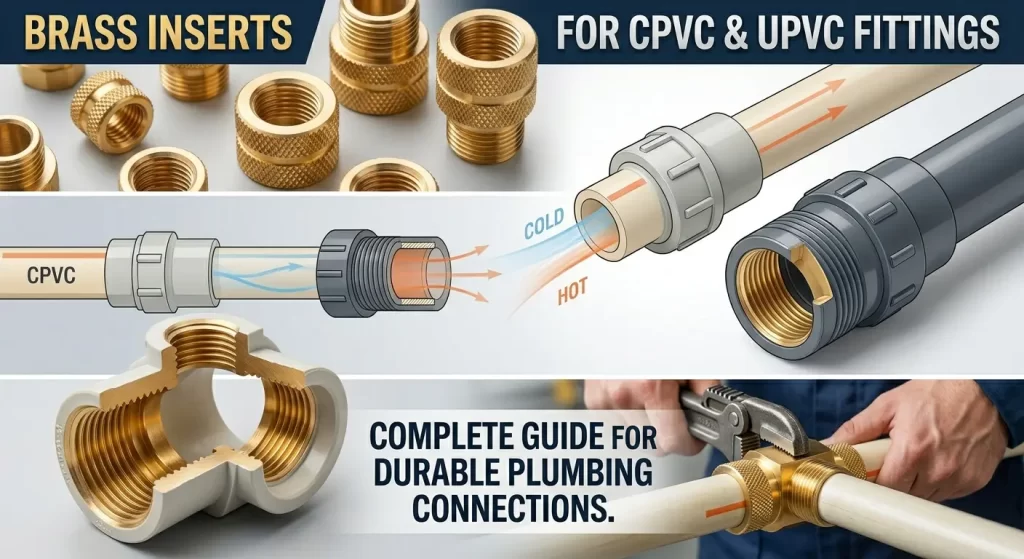
Brass inserts for CPVC and UPVC pipe fittings are precision-engineered metal components embedded in plastic fittings to provide strong, reliable, and leak-proof threaded connections. They prevent thread wear, cracking, and failure when connecting plastic pipes to metal fixtures such as valves, taps, and pumps. High-quality brass inserts enhance durability, corrosion resistance, and overall performance of residential, commercial, and industrial plumbing systems.
Pipes and fittings often get most of the attention in plumbing, but the long-term reliability of a threaded connection comes down to a small, often-overlooked component: the brass insert. Embedded into CPVC and UPVC fittings, these inserts bridge the gap between rigid plastic piping and metal fixtures.
This guide covers what brass inserts are, why they’re essential, the types available, how they compare to plastic threads, their applications, manufacturing process, and what to look for when sourcing them.
🎯 Key Takeaways
- Provides strong metal threads inside CPVC & UPVC fittings.
- Prevents thread stripping and leakage over the life of the fitting.
- Available in male, female, and custom designs for different applications.
- Manufactured in CW614N, CW617N, CW602N, and lead-free brass alloys.
- Essential for residential, commercial, and industrial plumbing.
- Widely used in India, USA, Europe, and Middle East markets.
1. 📦 Quick Fact Box
| Feature | Benefit |
|---|---|
| Corrosion-resistant brass | Long service life |
| Precision threads | Leak-proof connections |
| High mechanical strength | Handles high pressure |
| Knurled surface | Secure plastic embedding |
| Reusable metal threads | Reduced maintenance |
| Lead-free options | Safe for potable water |
2. What Are Brass Inserts for CPVC & UPVC Pipe Fittings?
Brass inserts are small but crucial components embedded in CPVC (Chlorinated Polyvinyl Chloride) and UPVC (Unplasticized Polyvinyl Chloride) fittings. They provide a robust metallic thread interface that prevents plastic threads from wearing out or cracking when connected to metal valves, pumps, and fixtures.
By combining the corrosion resistance of plastic with the mechanical strength of brass, manufacturers create reliable, long-lasting plumbing connections.
3. Why Are Brass Inserts Essential?
While pipes and fittings often get the spotlight in plumbing, the durability of threaded connections depends heavily on the quality of brass inserts.
3.1 Enhanced Thread Strength
- Metal threads handle higher loads than plastic
- Prevents thread stripping during repeated use
- Ensures secure and stable connections
3.2 Leak Prevention
- Maintains precise thread alignment
- Reduces water leakage risks
- Supports long-term plumbing reliability
3.3 Increased Durability
- Resists wear from repeated installations
- Maintains thread integrity over decades
- Handles thermal expansion and contraction
3.4 Compatibility With Metal Fixtures
Brass inserts allow seamless connection with:
- Faucets and valves
- Water pumps and meters
- Pressure regulators and shower fittings
4. Why Brass Is the Industry Standard
Corrosion Resistance
Brass naturally withstands water, moisture, cleaning chemicals, and mineral deposits.
Machinability
Brass threads can be machined with precision, allowing:
- Tight tolerances
- Consistent dimensions
- High-volume production
Thermal Stability
Suitable for both hot and cold water applications, brass inserts maintain structural integrity over wide temperature ranges.
5. Types of Brass Inserts
5.1 Brass Male Inserts
- External threads for connecting taps, valves, or pumps
- High-pressure resistance and easy installation
5.2 Brass Female Inserts
- Internal threads to receive male components
- Common in elbows, tees, and couplers
- Provides strong engagement and leak-free connections
5.3 Custom Brass Inserts
- OEM solutions based on thread standards, pipe dimensions, and application requirements
- Optimized for specific plumbing systems
6. 📊 Brass Inserts vs Plastic Threads
| Parameter | Brass Insert | Plastic Thread |
|---|---|---|
| Strength | Excellent | Moderate |
| Reusability | High | Limited |
| Wear Resistance | Excellent | Low |
| Pressure Handling | Superior | Moderate |
| Leak Prevention | Excellent | Moderate |
| Service Life | Long-term | Short-term |
7. Applications
- Residential Plumbing: Kitchens, bathrooms, water heaters
- Commercial Buildings: Hotels, hospitals, schools, office complexes
- Industrial Systems: Water treatment, chemical handling, cooling systems
- Agricultural Irrigation: Drip irrigation, sprinkler systems
- Infrastructure Projects: Large-scale pipelines and municipal water distribution
8. Manufacturing Process
- Raw Material Selection: CW614N, CW617N, CW602N, and lead-free alloys
- Precision Machining: CNC threading and tolerance control
- Knurling: External gripping patterns to embed in plastic
- Surface Finishing: Nickel, chrome, or natural brass finishes
- Quality Inspection: Thread accuracy, dimensional check, surface quality
High-quality manufacturing ensures consistent performance for both domestic and international markets.
9. 📌 Factors When Choosing Brass Inserts
- Material Grade: Ensures corrosion resistance and durability
- Thread Accuracy: Prevents leakage and installation issues
- Surface Finish: Enhances protection and longevity
- Compliance: Meets ASTM, ISO, and NSF standards
10. Global Demand
Urbanization, infrastructure growth, and water distribution initiatives are increasing the demand for CPVC/UPVC systems with brass inserts in:
- India
- USA
- Europe
- Middle East
High-quality brass inserts are critical for OEMs and distributors serving these markets.
Why Choose Anand Brass Components
- CNC precision manufacturing
- OEM & custom solutions
- Multiple brass grades and lead-free options
- Nickel and chrome plating available
- Export-quality products trusted in India, USA, Europe, and Middle East
 Related Articles
11. Internal Linking Suggestions
| Anchor Text | URL |
|---|---|
| Brass Inserts Manufacturer | anandbrass.com/brass-inserts-for-cpvc-upvc-pipe-fittings |
| Brass Inserts for Plastic Molding | anandbrass.com/brass-inserts-complete-guide |
| CPVC & UPVC Brass Inserts | anandbrass.com/brass-inserts-for-cpvc-upvc-pipe-fittings |
Frequently Asked Questions
Looking for High-Quality Brass Inserts for CPVC & UPVC Pipe Fittings?
Anand Brass Components manufactures precision-engineered brass inserts designed for superior thread strength, leak-proof performance, corrosion resistance, and long service life. Whether you need standard products or customized OEM solutions, our team can deliver export-quality brass components tailored to your specifications.
Authoritative References
- ASTM F439 — Standard Specification for Chlorinated Poly(Vinyl Chloride) (CPVC) Plastic Pipe Fittings — astm.org/f0439
- ASTM D2846 — Standard Specification for CPVC Hot and Cold Water Distribution Systems — astm.org/d2846
- ISO 965 — General Purpose Metric Screw Threads – Tolerances — iso.org
- Copper Development Association (CDA) — Engineering Properties and Applications of Brass Alloys — copper.org/resources/properties
- NSF/ANSI/CAN 61 — Drinking Water System Components — nsf.org
- Bureau of Indian Standards (BIS) — Standards for Plastic Piping Systems and Plumbing Components — bis.gov.in