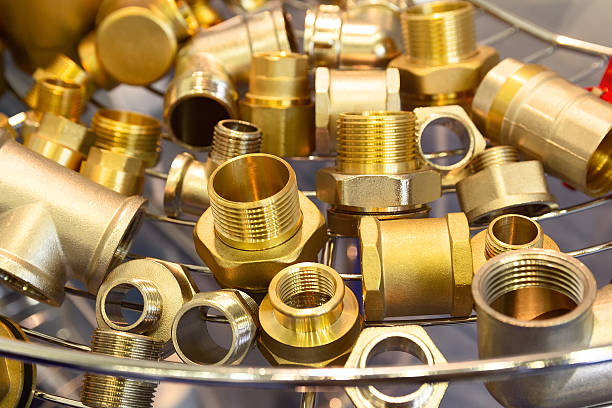
Brass fittings are among the most widely used connecting components in plumbing, hydraulic, pneumatic, and industrial fluid transfer systems worldwide. Their excellent corrosion resistance, ease of machining, and compatibility with a broad range of fluids and gases make brass the material of choice for connectors, adapters, elbows, tees, and hose barb fittings across countless applications.
This guide provides a thorough overview of brass fittings — from fundamental categories and thread standards to pressure ratings, material grades, and selection criteria.
Brass as a Fitting Material
For fittings applications, the most commonly used grades include CZ132 (dezincification-resistant brass), C37700 (forging brass), and CW617N (European equivalent). Dezincification-resistant (DZR) brass is mandated by building codes in many countries for potable water applications. Always confirm the alloy grade meets dezincification resistance requirements for your jurisdiction.
Major Types of Brass Fittings
Brass Hose Fittings (Barb Fittings)
Hose barb fittings feature a ridged end that grips the inside of a flexible hose when secured with a clamp. Available in straight, elbow, tee, and cross configurations. Widely used in irrigation, automotive cooling, aquarium equipment, and low-pressure pneumatic systems. Common sizes range from 6 mm to 25 mm barb diameter.
Compression Fittings
Compression fittings create a seal by compressing a ferrule against the pipe when the nut is tightened. They provide reliable, reusable connections without soldering. Standard in residential and commercial plumbing for copper, PEX, and polyethylene tubing.
Flare Fittings
Flare fittings seal by pressing a flared tube end against a conical seat. SAE 45-degree flare fittings are the most common, used in refrigeration, air conditioning, fuel lines, and hydraulic systems. They provide vibration-resistant metal-to-metal seals.
Threaded Fittings (NPT, BSP, Metric)
Threaded brass fittings include elbows, tees, couplings, unions, nipples, plugs, and bushings. NPT is standard in North America, BSP in Europe, Asia, and Australia. Metric threads are gaining adoption. PTFE tape or pipe dope ensures leak-free tapered thread connections.
Push-Fit Quick-Connect Fittings
Push-fit brass fittings allow tool-free connections. An internal grab ring and O-ring provide mechanical retention and sealing. They have revolutionized residential plumbing by eliminating soldering.
Thread Standards and Sizing
-
NPT (National Pipe Thread Taper): Used in USA/Canada. 1.7899-degree taper, 60-degree thread angle. Sizes by nominal pipe size.
-
BSPT (British Standard Pipe Taper): Similar to NPT but 55-degree angle. Common in Europe, Asia, Middle East. NOT interchangeable with NPT.
-
BSPP (British Standard Pipe Parallel): Non-tapered threads relying on washer/O-ring for sealing. Used in hydraulic systems.
-
Metric Threads: Designated by M + diameter (e.g., M20x1.5). Used in automation and cable gland applications.
Pressure Ratings and Temperature
Standard plumbing brass fittings are typically rated 150 PSI at ambient temperature. Ratings decrease with temperature — a 150 PSI fitting at 20C may only suit 75 PSI at 100C. Forged fittings handle 300-1,000+ PSI depending on design. Always verify pressure-temperature ratings including transient spikes.
Applications
-
Residential and Commercial Plumbing: Water supply, fixture connections, shut-off valves, manifolds.
-
HVAC and Refrigeration: Refrigerant lines, condensate drains, chiller connections.
-
Automotive and Marine: Fuel lines, coolant hoses, brake connections, bilge pumps.
-
Industrial: Chemical dosing, compressed air, hydraulics, lubrication systems.
-
Agriculture: Drip irrigation, sprinkler systems, tank fittings.
-
Gas Distribution: Natural gas and LPG connections meeting safety certifications.
Sourcing from Anand Brass Components
Anand Brass Components produces a comprehensive range of brass hose fittings, compression fittings, and custom-machined fittings from its 15,000 sq ft facility in GIDC Phase-III, Jamnagar. With in-house extrusion and CNC machining, the company delivers fittings for clients across India, the USA, and the UK with competitive pricing and short lead times.
Frequently Asked Questions
Q: What is the difference between hose fittings and pipe fittings?
Hose fittings use barbed connections for flexible hoses. Pipe fittings use threaded, compression, or soldered joints for rigid pipes.
Q: Are brass fittings safe for drinking water?
Yes, when made from lead-free DZR brass alloys complying with NSF/ANSI 61 or WRAS standards
Q: Can brass fittings be used with stainless steel?
Yes, but use dielectric unions to prevent galvanic corrosion at the junction.
Q: What surface finishes are available?
Natural brass, nickel plating, chrome plating, and tin plating are common options.
