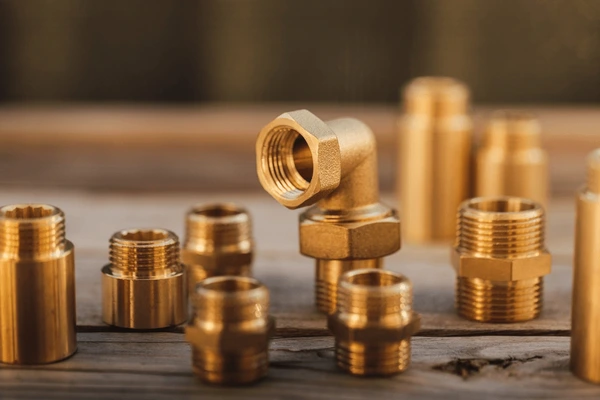
Brass cable glands are essential mechanical cable entry devices that provide secure attachment, strain relief, and environmental sealing where electrical cables enter equipment enclosures, junction boxes, control panels, and switchgear. They serve as the critical interface between cable and equipment — protecting against moisture, dust, cable pull-out, and electromagnetic interference.
This comprehensive guide covers every aspect of brass cable gland selection, helping electrical engineers, panel builders, and procurement professionals make confident decisions.
What Are Brass Cable Glands?
A cable gland attaches and secures electrical cables to equipment. It mechanically anchors the cable, seals against environmental ingress (water, dust, gases), may provide earth continuity for armored cables, and in hazardous areas maintains explosion-proof integrity. Brass is preferred for its mechanical strength, corrosion resistance, electrical conductivity, and non-sparking properties.
Types of Brass Cable Glands
Single Compression Cable Glands
One sealing ring compresses around the cable's outer sheath. Suitable for unarmored cables in general industrial and commercial applications. Simple design enables quick, cost-effective installation.
Double Compression Cable Glands
Two independent sealing points — one for cable armor, one for outer sheath. Superior mechanical retention and sealing. Standard choice for armored cables in demanding environments.
Barrier Cable Glands
Include a compound-filled chamber preventing gas and flame passage along cable interstices. Required in Zone 1 and Zone 2 hazardous areas per IEC 60079.
EMC/RFI Cable Glands
Spring contacts or conductive ferrules establish 360-degree electrical connection between cable shield and enclosure. Essential for electromagnetic shielding in data centers and telecommunications.
Weatherproof and Marine Cable Glands
Enhanced sealing to IP68 with corrosion-resistant coatings, stainless steel components, and extended temperature range elastomers for extreme conditions.
IP Ratings and Environmental Protection
-
IP66: Dust-tight. Protection against powerful water jets. Suitable for most indoor/outdoor industrial applications.
-
IP67: Dust-tight. Protection against temporary immersion to 1 meter for 30 minutes. Suitable for wash-down areas.
-
IP68: Dust-tight. Protection against continuous immersion beyond 1 meter. Required for submerged installations.
Thread Standards
-
Metric (M12-M75): Most widely used globally. Specified in IEC 62444. Default for modern equipment.
-
PG (PG7-PG48): Older German standard being phased out. Still on legacy equipment.
-
Automotive and Marine: Fuel lines, coolant hoses, brake connections, bilge pumps.
-
NPT (1/2"-2"): Standard in USA/Canada. Tapered threads provide mechanical attachment.
-
BSP: British Standard Pipe threads for UK-origin equipment.
Hazardous Area Selection
Zones 0, 1, and 2 classify gas hazard probability. Zones 20, 21, and 22 cover combustible dust. Cable glands must carry ATEX (European), IECEx (international), or UL/CSA (North American) certifications matching the zone classification and equipment protection concept.
How to Size and Specify
-
Identify cable type: unarmored, steel wire armored, steel tape armored, or braided.
-
Measure cable outer diameter at entry point.
-
Select gland size matching the cable within published clamping range.
-
Match thread type and size to equipment entry hole.
-
Verify IP rating meets environmental requirements.
-
Confirm hazardous area certification if applicable.
Brass Cable Glands from Anand Brass Components
Anand Brass Components manufactures single compression, double compression, and weatherproof cable glands in metric, PG, and NPT configurations. All glands are manufactured from high-grade brass with optional nickel plating, in sizes M12 through M75 and PG7 through PG48. The company serves clients across India, the USA, and the UK from its GIDC Phase-III facility.
Frequently Asked Questions
Q: Single vs double compression cable glands?
Single has one sealing point for unarmored cables. Double has two for armored cables with superior retention.
Q: Is nickel plating necessary?
Recommended for chemical exposure, humidity, salt spray, or outdoor use. Natural brass suits dry indoor environments.
Q: How to determine cable gland size?
Measure cable outer diameter and select a gland whose published clamping range covers it.
Q: What certifications for hazardous areas?
ATEX (Europe), IECEx (international), or UL/CSA (North America) depending on installation location.
