
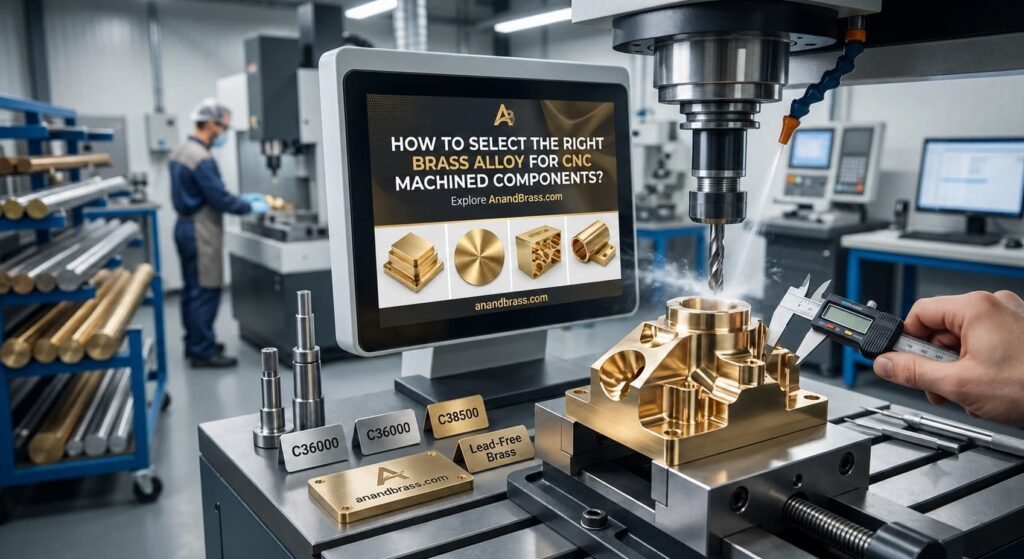
⚡ Quick Answer
Brass alloy for CNC machining should be selected according to the component’s application, required strength, machinability, corrosion resistance, operating environment, and applicable industry standards. Different brass alloys provide different combinations of mechanical and machining properties.
Commonly used alloys such as CW614N, CW617N, CW602N, CW511L, and C69300 can be selected according to the specific requirements of the finished component. Choosing the correct alloy can improve machining efficiency, dimensional accuracy, durability, and overall component performance.
Commonly used alloys such as CW614N, CW617N, CW602N, CW511L, and C69300 can be selected according to the specific requirements of the finished component. For example, some alloys are preferred for excellent machinability, while others are better suited for plumbing, potable water, corrosion-resistant, or lead-free applications.
For OEMs, engineers, and industrial buyers, selecting the correct brass alloy can improve machining efficiency, component durability, dimensional accuracy, and overall product performance. Working with an experienced brass components manufacturer can also help ensure that the selected material meets the required specifications and application requirements.
Whether you need precision brass turned parts, CNC-machined components, fittings, inserts, electrical parts, or custom OEM components, understanding the properties of different brass alloys is essential for achieving reliable and consistent results.
What Is a Brass Alloy?
A brass alloy is primarily made from copper and zinc, with other elements sometimes added to improve properties such as machinability, strength, corrosion resistance, and durability.
Brass is widely used for CNC machining because it offers excellent machinability, dimensional stability, and surface finish. Different brass grades are selected according to the requirements of the finished component and its application.
Choosing the correct alloy helps manufacturers achieve better machining performance, component accuracy, durability, and overall product reliability.
Why Is Brass Widely Used for CNC Machined Components?
Brass is one of the most commonly used materials for CNC machined components because it offers excellent machinability, strength, corrosion resistance, and dimensional stability.
- Excellent Machinability : Allows fast and precise CNC machining.
- Good Corrosion Resistance : Suitable for demanding industrial environments.
- High Dimensional Accuracy : Supports components with tight tolerances.
- Excellent Surface Finish : Produces smooth and attractive machined surfaces.
- Long Service Life : Provides reliable performance across various applications.
These properties make brass suitable for manufacturing precision fittings, inserts, connectors, valves, electrical parts, and custom OEM components.
Factors to Consider When Selecting a Brass Alloy for CNC Machining
Selecting the right brass alloy depends on the component’s design, application, and required performance. Before choosing a material, manufacturers and OEMs should consider the following factors:
- Machinability : Choose an alloy that allows efficient and precise CNC machining.
- Strength : Consider the mechanical strength required for the application.
- Corrosion Resistance : Select the appropriate grade for the operating environment.
- Application : Plumbing, electrical, automotive, and industrial components may require different alloys.
- Surface Finish : Consider whether the component requires nickel, chrome, tin, or other finishing.
- Industry Standards : Ensure the selected alloy meets applicable technical and regulatory requirements.
Choosing the correct brass alloy from the beginning helps improve machining efficiency, component performance, and product reliability.
Common Brass Alloys Used for CNC Machining
Different brass alloys provide different levels of machinability, strength, corrosion resistance, and environmental compliance. Selecting the appropriate grade helps ensure that CNC machined components perform reliably in their intended application.
| Brass Alloy | Key Properties | Common Applications |
|---|---|---|
| CW614N | Excellent machinability and good strength | Precision turned parts, fittings, connectors |
| CW617N | Good strength, machinability, and corrosion resistance | Valves, plumbing components, fittings |
| CW602N | Dezincification-resistant and corrosion resistant | Plumbing and water applications |
| CW511L | Low-lead / lead-reduced composition | Drinking water and plumbing components |
| C69300 | Lead-free, good strength and machinability | Potable water and precision components |
The final alloy selection should always be based on the component’s application, performance requirements, machining process, and applicable standards.
CW614N vs CW617N vs CW602N: Which Brass Alloy Should You Choose?
CW614N, CW617N, and CW602N are commonly selected for different types of brass components. The right choice depends on the component’s application, machining requirements, and operating environment.
- CW614N : Best suited for precision CNC machining where excellent machinability is important.
- CW617N : Suitable for fittings, valves, and components requiring a good balance of strength and machinability.
- CW602N : Preferred for plumbing and water applications where resistance to dezincification is important.
Understanding these differences helps OEMs and manufacturers select the most suitable brass alloy for their CNC machined components and achieve reliable long-term performance.
How to Choose the Right Brass Alloy?
The right brass alloy depends on the component’s application and required performance.
- CNC Parts : Choose alloys with excellent machinability.
- Plumbing : Consider corrosion and dezincification resistance.
- Potable Water : Use suitable lead-free or low-lead alloys.
- Electrical Parts : Consider conductivity and corrosion resistance.
- Automotive Parts : Focus on strength, durability, and wear resistance.
Selecting the correct alloy helps ensure precision, durability, and reliable performance.
Benefits of Choosing the Right Brass Alloy
Selecting the appropriate brass alloy can improve both the manufacturing process and the performance of the finished component.
- Better Machinability : Enables efficient and precise CNC machining.
- Improved Durability : Provides reliable performance and longer service life.
- Corrosion Resistance : Helps components perform in demanding environments.
- Consistent Quality : Supports accurate dimensions and reliable production.
- Cost Efficiency : Reduces machining issues, material waste, and production costs.
The right alloy selection helps manufacturers achieve high-quality CNC machined brass components that meet application requirements.
Applications of CNC Machined Brass Components
CNC machined brass components are used across industries where precision, durability, and corrosion resistance are important.
- Automotive Industry : Connectors, fittings, and precision parts.
- Plumbing Industry : Valves, adapters, fittings, and inserts.
- Electrical Industry : Terminals, connectors, and electrical components.
- Industrial Equipment : Custom parts, bushings, and mechanical components.
- OEM Manufacturing : Precision components manufactured according to customer specifications.
The versatility of brass makes it a reliable material for producing custom CNC-machined components for a wide range of industrial applications.
How Are CNC Machined Brass Components Manufactured?
Manufacturing CNC machined brass components involves several controlled stages to achieve the required precision, dimensions, and surface finish.
- Material Selection : The appropriate brass alloy is selected according to the application.
- CNC Machining : Brass bars or blanks are machined according to the required design.
- Precision Inspection : Components are checked for dimensions and tolerances.
- Surface Finishing : Plating or other finishing processes are applied when required.
- Final Quality Check : Finished components are inspected before packaging and shipment.
Advanced CNC machining and strict quality control help ensure consistent and reliable brass components for OEM and industrial applications.
Why Choose Anand Brass Components?
Anand Brass Components manufactures high-quality CNC machined brass components for OEMs and industries worldwide. With advanced manufacturing capabilities and strict quality control, we deliver precision-engineered products that meet customer specifications.
- Precision CNC Manufacturing
- Wide Range of Brass Alloys
- Custom OEM Solutions
- Strict Quality Inspection
- Competitive Pricing
- Global Export Experience
Our commitment to quality, precision, and customer satisfaction makes us a trusted partner for brass component manufacturing.
🎯 Key Takeaways
- Choose the Right Alloy : Select the brass grade according to the application and required performance.
- Machinability Matters : The right alloy improves CNC machining efficiency and precision.
- Consider the Environment : Corrosion and dezincification resistance are important for plumbing and water applications.
- Follow Standards : Ensure the selected alloy meets relevant industry and application requirements.
- Work With an Experienced Manufacturer : A reliable manufacturer can help select and produce the right brass components.
Frequently Asked Questions
Looking for High-Quality CNC Machined Brass Components?
Anand Brass Components manufactures precision CNC machined brass components for automotive, plumbing, electrical, industrial, and OEM applications. From standard components to fully customized parts, we provide reliable manufacturing solutions based on customer drawings and specifications.
Looking for the right brass alloy for your application? Explore our Products